Note
pgplex: Modern Developer Stack for Postgres - pgconsole · pgtui · pgschema · pgparser
Brought to you by Bytebase, open-source database DevSecOps platform.

|
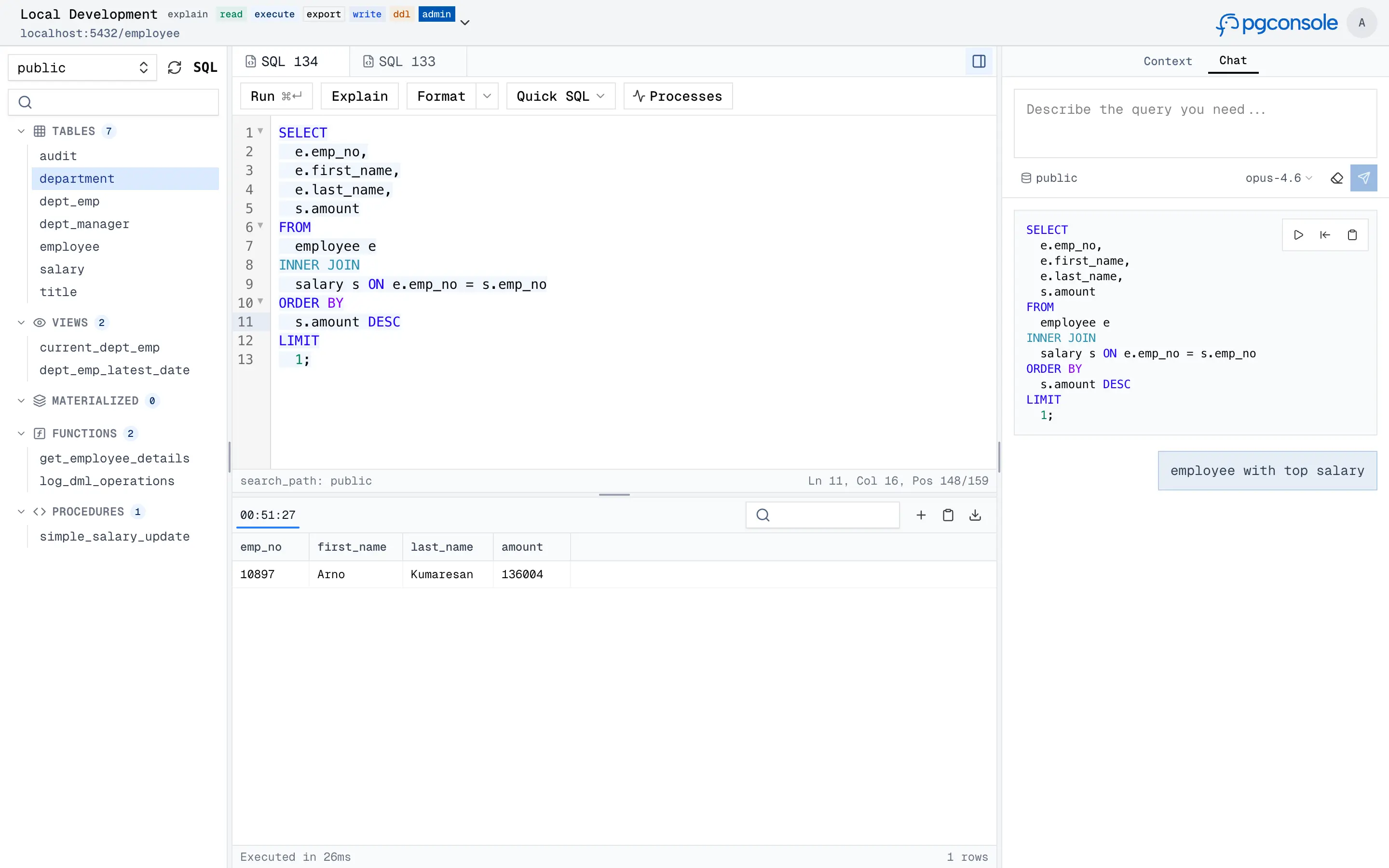
pgconsole is a web-based PostgreSQL editor. Single binary, single config file, no database required. Connect your team to PostgreSQL with access control and audit logging built in.
Visit https://docs.pgconsole.com/getting-started/quickstart
- Node.js 20+
npm install -g @pgplex/pgconsole
pgconsole --config pgconsole.toml
npx @pgplex/pgconsole --config pgconsole.tomldocker run -p 9876:9876 -v /path/to/pgconsole.toml:/etc/pgconsole.toml pgplex/pgconsoleRun without --config to start in demo mode with a bundled sample database.
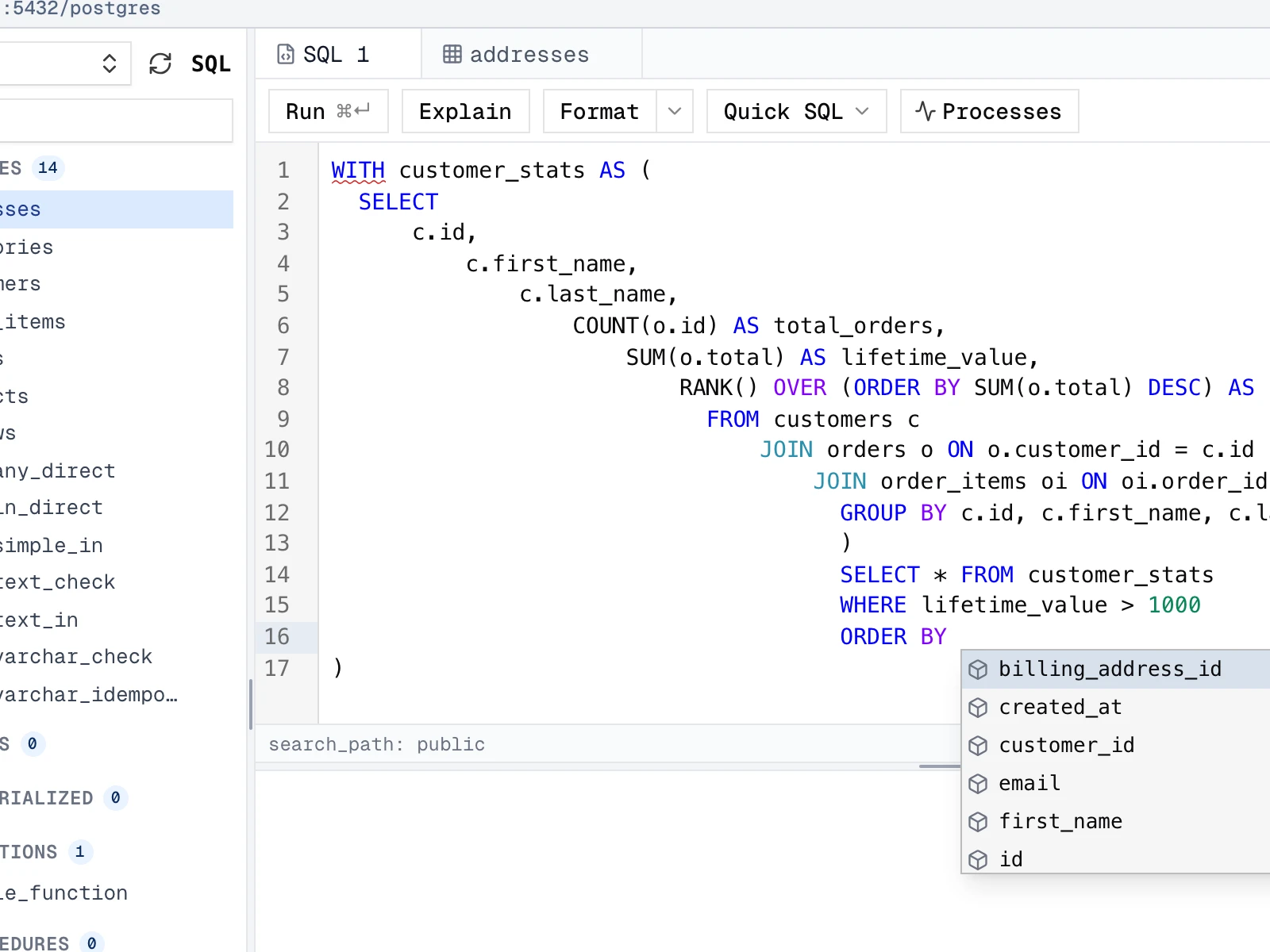
A full-featured SQL workspace for writing, running, editing, and inspecting PostgreSQL, with parser-powered intelligence in the editor.
- Autocomplete — context-aware suggestions for tables, columns, joins, and CTEs
- Formatting — pretty-print or collapse SQL to one line
- Error detection — red underlines with hover tooltips
- Code folding — collapse
SELECT,WITH, and other blocks - Function signature help — parameter hints as you type
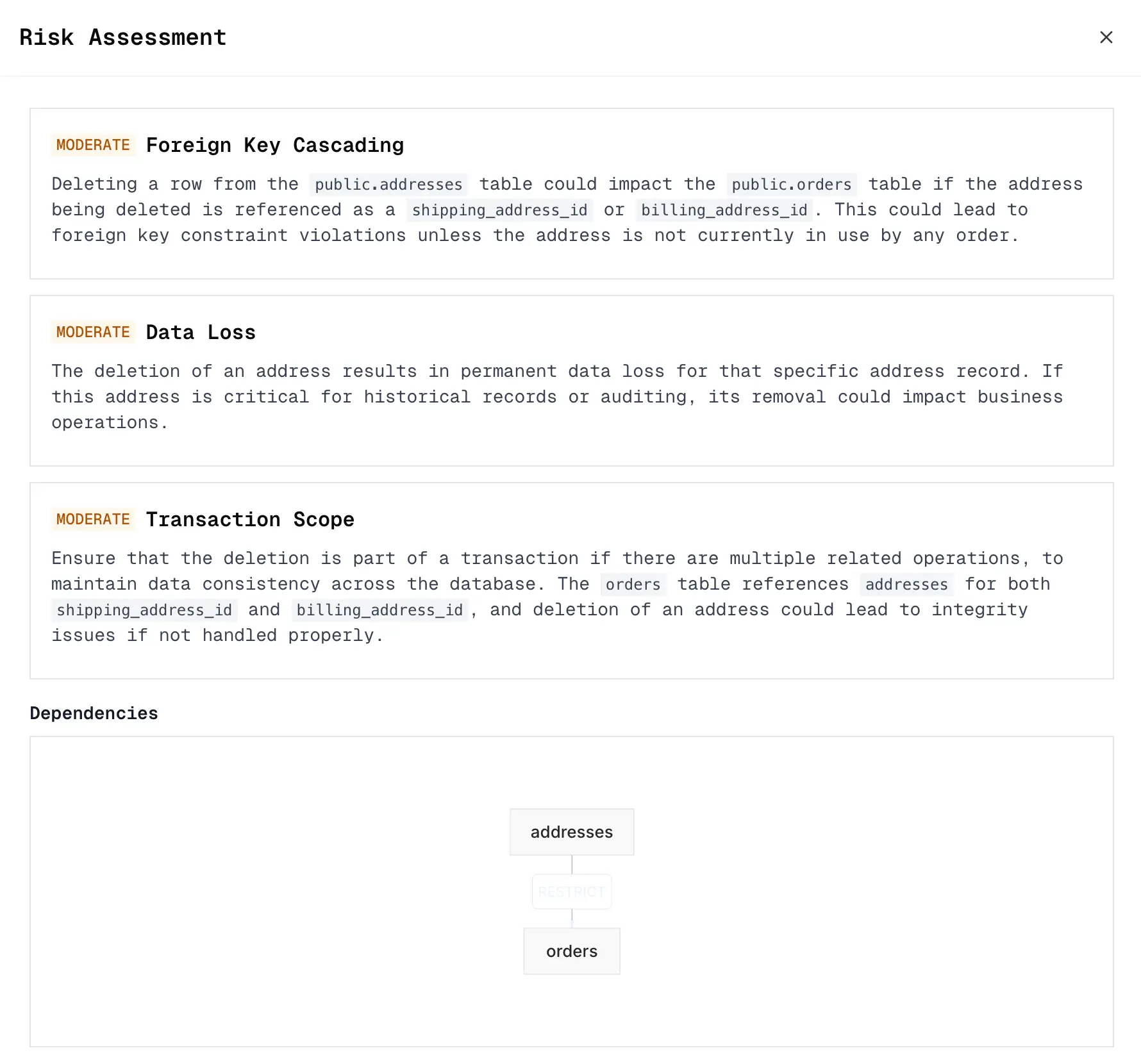
- Result grid & inline editing — virtual-scrolling query results with staged edits, generated SQL previews, and optional AI risk assessment before execution
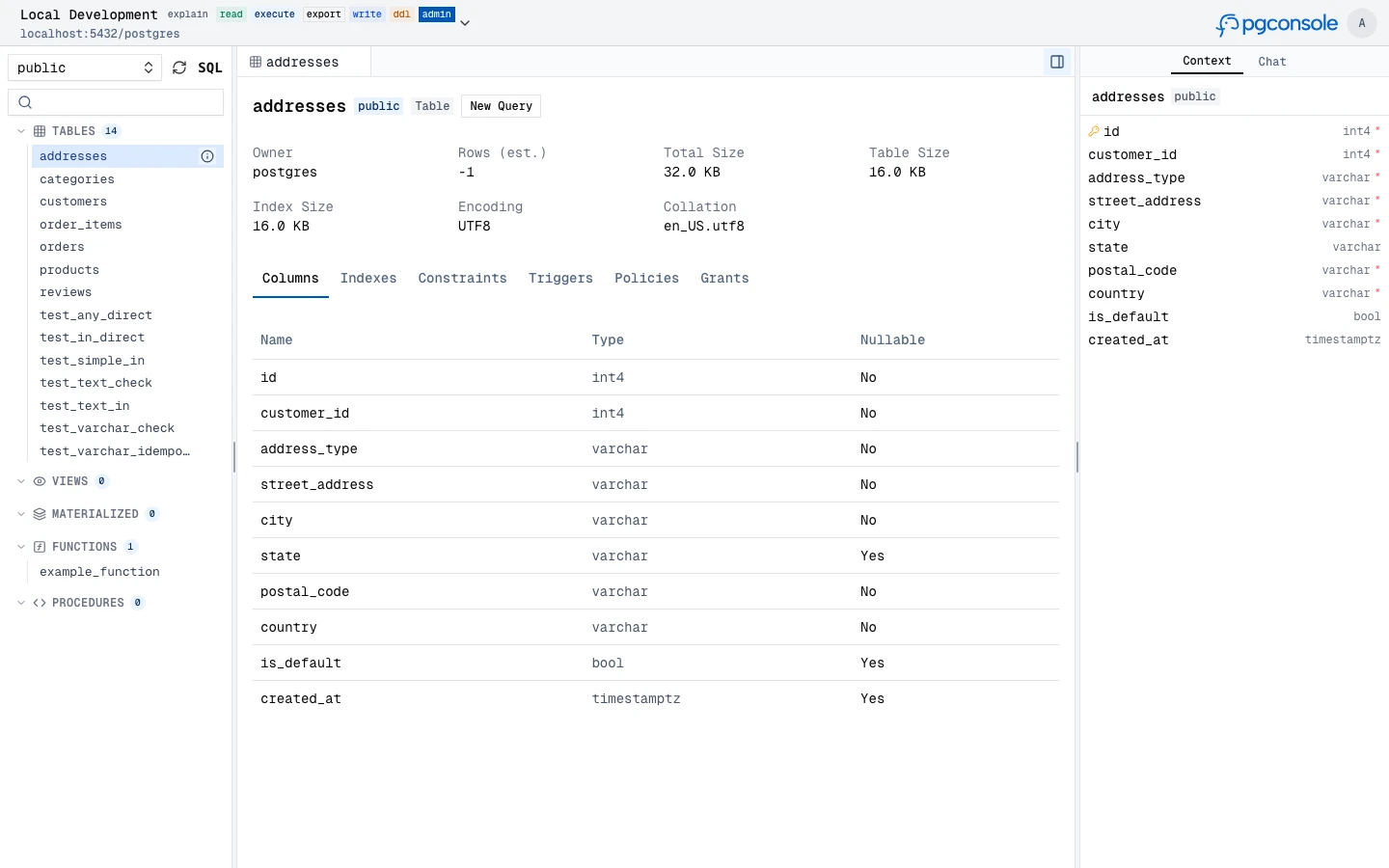
- Schema browser — inspect tables, views, materialized views, functions, and procedures with metadata, indexes, constraints, triggers, and grants
|

|
|
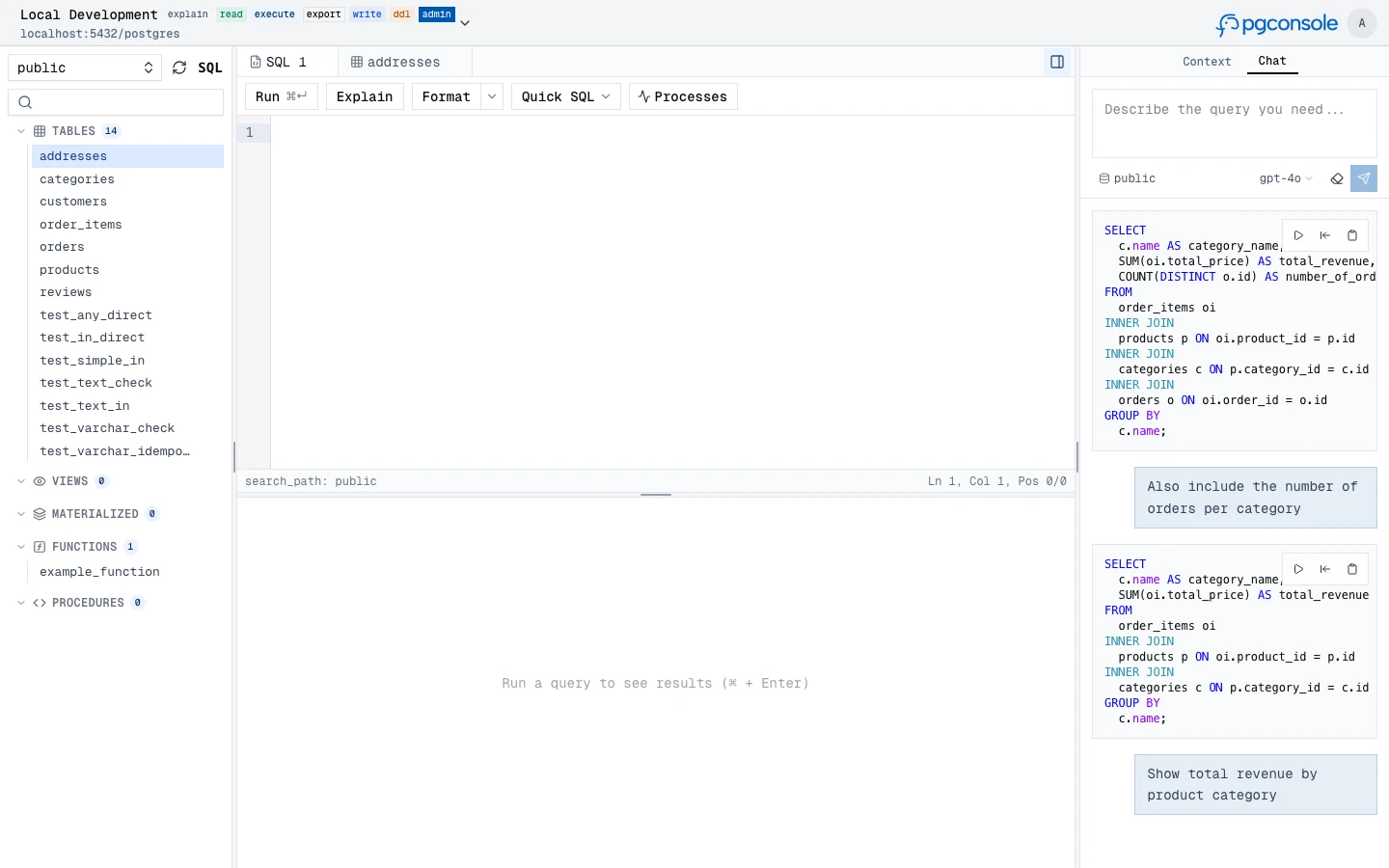
Generate, explain, fix, and rewrite SQL with an AI assistant that understands your schema context. Supports OpenAI, Anthropic, and Google providers.
- Text-to-SQL — describe a query in natural language, get SQL back
- Explain SQL — get plain-language explanations of any query
- Fix SQL — AI-powered error correction from inline linting
- Rewrite SQL — optimize queries for performance or readability
- Risk assessment — analyze staged changes for potential risks before execution
|
|
Expose your Postgres connections to external AI agents (Claude, Cursor, IDEs, CI bots) over the Model Context Protocol — without handing out raw database credentials. Agents connect to a remote MCP endpoint and inherit the same IAM, permission, and audit controls as human users.
- Remote & token-authenticated — a Streamable HTTP endpoint at
/mcp; each agent authenticates withAuthorization: Bearer <token> - Two agent kinds — a pure service account (authorized by
agent:<id>IAM rules) or a delegated agent that acts on behalf of a user, optionally capped to fewer permissions or connections - Permission-shaped tools — every agent can
list_connections; catalog tools (list_objects,describe_table) appear once it has an accessible connection, and execution tools unlock per grant:explain_query(explain),query(read),write_data(write),run_ddl(ddl) - Same governance as the UI — every statement runs through per-statement SQL permission detection, default-deny IAM, and the audit log
# A standalone agent, authorized via [[iam]] just like a user
[[agents]]
id = "ci-bot"
name = "CI Pipeline"
token = "generate-a-long-random-secret"   # openssl rand -hex 32

[[iam]]
connection = "staging"
permissions = ["read", "ddl"]
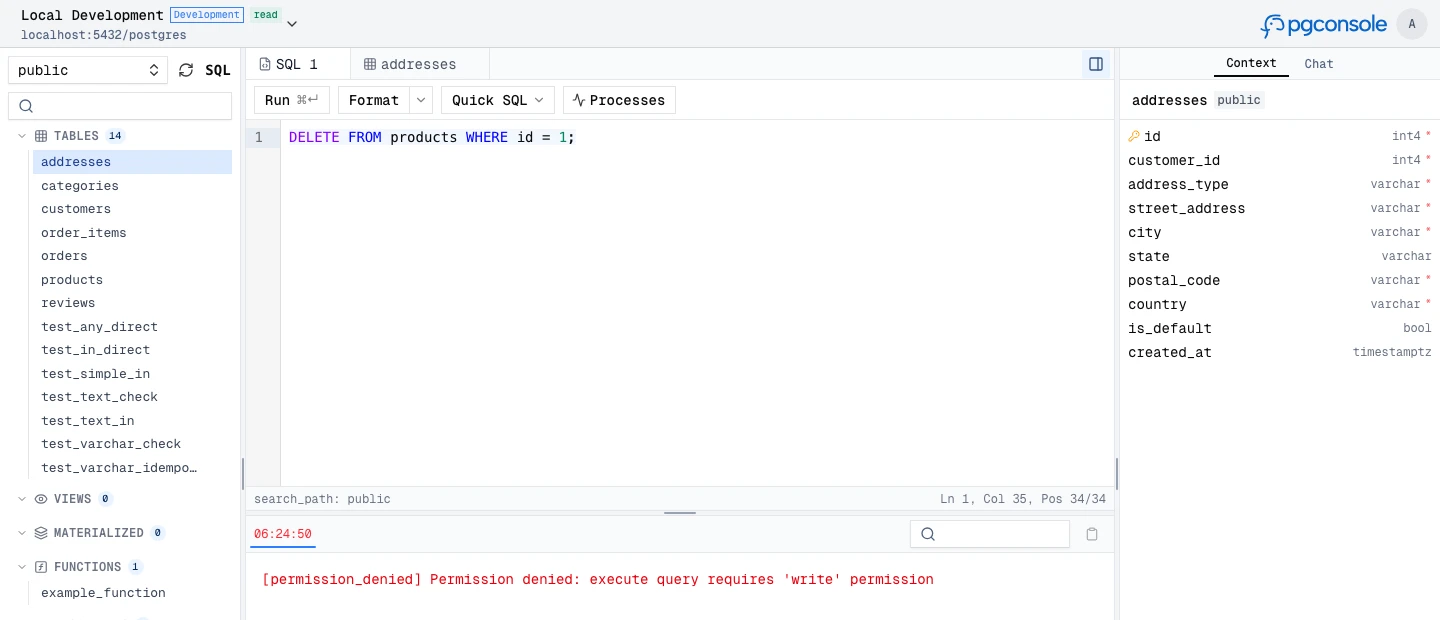
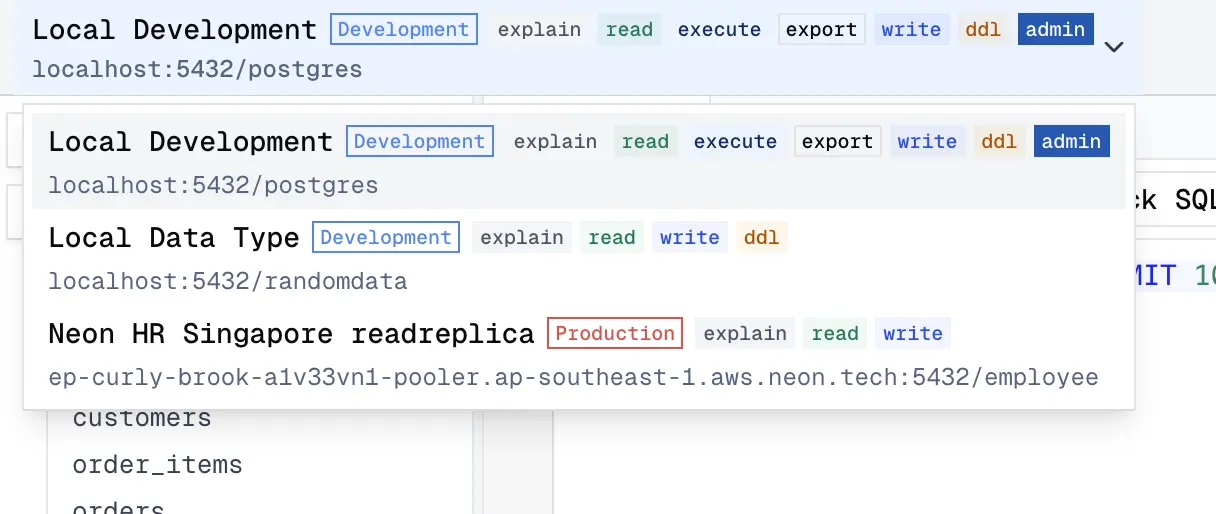
members = ["agent:ci-bot"]Fine-grained IAM controls who can read, write, or administer each connection. Permissions are enforced at the application layer — no database roles needed.
- Default deny — users have no access unless a rule explicitly grants it
- Connection-scoped — permissions are granted per connection, not globally
- Disjoint permissions —
read,write,ddl,admin,explain,execute,exportare independent
|
|
Every query and login is recorded as structured JSON to stdout. Filter and forward to your log infrastructure.
{
  "type": "audit",
  "ts": "2024-01-15T10:32:15.456Z",
  "action": "sql.execute",
  "actor": "alice@example.com",
  "connection": "prod-db",
  "sql": "SELECT * FROM users WHERE active = true",
  "duration_ms": 45,
  "row_count": 150
}Everything lives in pgconsole.toml — connections, users, groups, access rules, AI providers. No database required.
[[connections]]
id = "production"
name = "Production"
host = "db.example.com"
port = 5432
database = "myapp"
username = "readonly"
password = "..."

[[iam]]
connection = "production"
permissions = ["read", "explain", "export"]
members = ["*"]

[[iam]]
connection = "production"
permissions = ["*"]
members = ["group:dba"]

[[ai.providers]]
id = "claude"
vendor = "anthropic"
model = "claude-sonnet-4-20250514"
api_key = "sk-ant-..."Note
For external contributors: If you want to request a feature, please create a GitHub issue to discuss first instead of creating a PR directly.
git clone https://github.com/pgplex/pgconsole.git
cd pgconsole
pnpm install
pnpm dev        # Start dev server (frontend + backend)
pnpm build      # Production build
pnpm test # Run all testsBytebase - open source, web-based database DevSecOps platform.